

Time:2025.12.02Browse:1
Technical and Application Analysis of Bluetooth-Enabled Battery-Powered Thermal Receipt Printers
1. Core Positioning and Key Characteristics
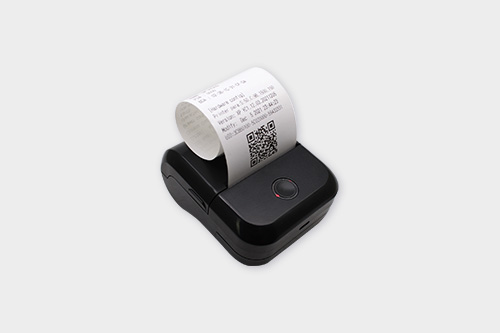
Bluetooth-enabled battery-powered thermal receipt printers integrate wireless connectivity, portable power supply, and thermal printing technology to address the demand for mobile receipt output in scenarios where wired power and network connections are unavailable. Their core value lies in breaking spatial constraints—enabling users to print transaction receipts, service certificates, or proof of delivery anytime and anywhere—while maintaining the advantages of thermal printing (no ink/toner, low maintenance costs).
Key distinguishing characteristics include:
Bluetooth-centric wireless connectivity: Focuses on stable short-range data transmission (typically 10–30 meters), supporting quick pairing with smartphones, tablets, or portable POS terminals, and adapting to multi-device switching (e.g., alternating between two cashiers’ mobile devices in a market setting).
Battery-driven portability: Relies on rechargeable batteries for power, eliminating reliance on AC outlets. The overall design emphasizes compactness and light weight (usually 300–800 grams) to facilitate one-handed operation or carrying in a backpack.
Receipt-oriented printing optimization: Tailored to receipt specifications—supporting common thermal paper widths (57mm or 80mm), matching the text and barcode clarity requirements of retail, catering, and service industries, and ensuring fast printing speeds (40–80mm per second) to avoid queuing during peak hours.
2. Key Technical Parameters and Implementation
2.1 Bluetooth Module Design and Performance
The Bluetooth module is a core component determining wireless transmission stability, with technical design focused on three aspects:
Version selection and power consumption balance: Most models adopt Bluetooth 5.0 or later versions. Bluetooth 5.0 offers dual advantages—low energy consumption (reducing battery drain by 30–50% compared to Bluetooth 4.2) and extended transmission distance (up to 30 meters in open areas), which is critical for scenarios like large-scale farmers’ markets or exhibition halls where devices may be spaced apart.
Anti-interference capability: Integrates frequency hopping spread spectrum (FHSS) technology to avoid signal disruption from other wireless devices (e.g., WiFi routers, Bluetooth headsets) in dense environments. In tests, the packet loss rate remains below 1% when 5–8 Bluetooth devices are operating simultaneously within a 10-meter radius.
Data security: Supports encryption protocols such as AES-128 to prevent receipt data (e.g., transaction amounts, customer information) from being intercepted or tampered with during transmission, meeting basic data protection needs in retail and service industries.
2.2 Battery System and Endurance Optimization
Battery performance directly affects usability, and the design prioritizes endurance, safety, and charging efficiency:
Battery type and capacity: Lithium-polymer batteries are the mainstream choice (due to their thin profile, light weight, and resistance to leakage), with capacities typically ranging from 1500mAh to 4000mAh. A 2000mAh battery can support 500–800 receipt prints (based on average 80mm receipt length) on a single charge, covering a full day’s operation for small retail stores or mobile food stalls.
Charging and power management: Equipped with fast-charging functionality (supporting 5V/2A input), enabling a 0–80% charge in 1.5 hours. Built-in battery management systems (BMS) prevent overcharging, over-discharging, and short circuits—extending battery cycle life to 500–800 charges (equivalent to 2–3 years of regular use).
Low-power modes: Automatically enters standby mode (power consumption ≤5mA) after 5–10 minutes of inactivity, and deep sleep mode (power consumption ≤1mA) after 30 minutes, further reducing unnecessary energy loss during idle periods.
2.3 Thermal Printing Performance and Reliability
To meet receipt clarity and durability requirements, printing-related components undergo targeted optimization:
Printhead and resolution: Uses a ceramic thermal printhead with a resolution of 203dpi (the industry standard for receipts), ensuring clear printing of 8-point text, 1D barcodes (e.g., Code 128), and simple logos. The printhead’s service life is typically 100,000–300,000 prints, matching the device’s overall lifespan.
Paper feeding and compatibility: Adopts a rubber roller + spring pressure structure to ensure smooth paper advancement without jamming. Supports thermal paper with thicknesses of 50–80μm, compatible with both standard thermal receipt paper and eco-friendly thermal paper (reducing paper dust by 20–30%).
Environmental adaptability: The printhead and paper path are designed to resist minor dust and moisture, with operating temperatures ranging from 0°C to 40°C—adapting to indoor retail environments and outdoor scenarios like food trucks or street markets (excluding extreme weather conditions).
3. Typical Application Scenarios
3.1 Mobile Retail and Pop-Up Stores
In scenarios such as weekend markets, exhibition booths, or temporary pop-up stores, where wired infrastructure is lacking, the printer connects via Bluetooth to a merchant’s smartphone (running cash register apps). After a customer completes a payment (via mobile payment), the printer instantly outputs a receipt—eliminating the need for manual written records and improving transaction professionalism. For example, a jewelry vendor at a trade show can print a receipt with product details and warranty information on-site, enhancing customer trust.
3.2 Catering and Food Delivery
For food trucks, outdoor food stalls, or home delivery services, the printer solves the problem of receipt printing in mobile environments:
Food truck operators can pair the printer with a tablet to print order receipts for customers and production notes for the kitchen, streamlining the order process.
Delivery riders can connect the printer to their mobile phones, printing delivery confirmation receipts for customers to sign upon receiving meals—providing proof of delivery for both parties.
3.3 On-Site Service Industries
In fields like home appliance repair, furniture assembly, or HVAC maintenance, service technicians use the printer to print service receipts or work orders on-site:
After repairing a washing machine, the technician can generate a receipt with repair items, parts used, and warranty periods via a mobile app, which the customer signs to confirm—reducing disputes over service content.
For property maintenance staff, the printer can output inspection records or fee collection receipts during on-site visits, improving work efficiency.
4. Technical Optimization and Development Trends
4.1 Enhanced Bluetooth Connectivity
Future models may adopt Bluetooth 5.3 or Bluetooth Low Energy (BLE) 5.4, further reducing power consumption (by an additional 15–20%) and improving multi-device management capabilities (supporting simultaneous stable connections to 3–5 devices). Some designs may integrate dual-mode wireless (Bluetooth + WiFi) to adapt to scenarios where remote receipt storage or cloud synchronization is required (e.g., chain store receipt data aggregation).
4.2 Battery and Charging Innovations
Higher energy density batteries: The use of lithium-sulfur or solid-state batteries (once commercialized) could increase battery capacity by 50–100% without increasing volume, extending single-charge print counts to 1000–1500.
Wireless charging support: Adding Qi-standard wireless charging functionality would allow the printer to be recharged by placing it on a wireless charging pad—eliminating the need for frequent USB cable connections, which is convenient for busy retail environments.
4.3 Intelligent Function Expansion
Receipt data analytics: Integrating basic data processing capabilities to count daily print volumes, peak transaction times, or common receipt content—providing small merchants with simple business insights (e.g., identifying peak sales hours for a coffee stand).
Fault self-diagnosis: Adding LED indicators or app notifications for common issues (e.g., low battery, paper jam, printhead overheating) to guide users through quick troubleshooting, reducing maintenance reliance.
4.4 Environmental Adaptability Upgrades
For outdoor-focused scenarios (e.g., construction site canteens, outdoor ticket sales), future models may enhance dust and water resistance (reaching IP54 or IP65 ratings) and expand the operating temperature range (-10°C to 50°C)—ensuring stable operation in harsher environments.
Read recommendations:





Building C, Bairongda, Ma'anshan, Bao'an District, Shenzhen City, Guangdong Province
Tel:18823301751
Service Hotline:400-008-8930













 2024-11-19