

Time:2025.12.02Browse:1
Technical and Application Analysis of Portable Battery-Powered Thermal Printers for Field Work
1. Core Characteristics Matching Field Work Requirements
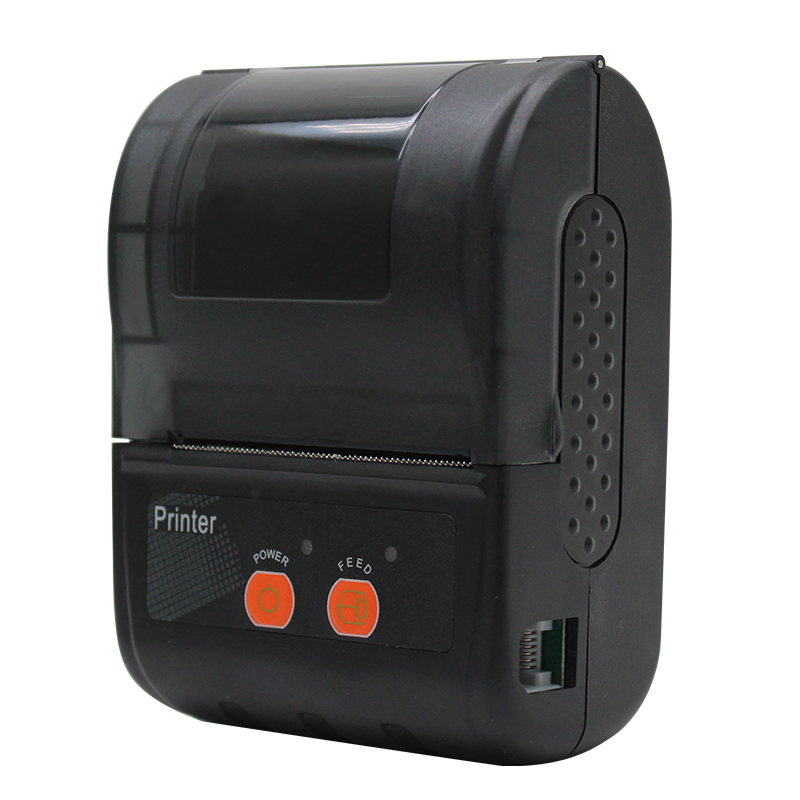
Portable battery-powered thermal printers for field work are designed to address the unique challenges of off-site operations, such as unstable power supply, harsh environmental conditions, and the need for mobility. Their core characteristics are tailored to these demands:
Ultra-Portability: With a compact form factor (typically 150-250mm in length, 80-120mm in width, and 50-80mm in height) and lightweight design (weighing 300-600g), they can be easily carried in backpacks or tool bags, suitable for field scenarios like geological surveys, environmental monitoring, and outdoor maintenance.
Long Battery Life: Equipped with high-capacity rechargeable lithium-ion batteries (2000-5000mAh), they support continuous printing of 500-1500 thermal labels or receipts on a single charge. Some models also feature low-power consumption modes, which can extend standby time to 72 hours or more when not in use.
Rugged Durability: Constructed with shock-resistant and waterproof materials (meeting IP54 or higher protection standards), they can withstand accidental drops from heights of 1.2-1.5 meters and operate normally in environments with temperatures ranging from -10°C to 50°C, adapting to dusty, rainy, or high-humidity field conditions.
2. Key Technical Parameters for Field Adaptation
To ensure reliable performance in field work, these printers need to meet specific technical standards in terms of printing capability, connectivity, and compatibility:
Printing Performance: They typically support a print width of 58mm or 80mm (common widths for field documents like test reports, asset tags, and work orders) with a resolution of 203dpi or 300dpi. The print speed ranges from 50mm/s to 100mm/s, enabling quick generation of documents to avoid delays in field operations.
Wireless Connectivity: Equipped with Bluetooth (Bluetooth 4.0 or higher) or Wi-Fi (802.11 b/g/n) modules, they can connect wirelessly to smartphones, tablets, or laptops—devices commonly used in field work—eliminating the need for cumbersome wired connections and enhancing operational flexibility.
Compatibility & Data Handling: They support multiple operating systems (iOS, Android, Windows) and can integrate with field work software (such as data collection apps, asset management systems, and inspection tools). Some models also have built-in memory (8MB-32MB) to store print templates or data temporarily, ensuring printing can proceed even in weak network environments.
3. Typical Application Scenarios in Field Work
Portable battery-powered thermal printers play a critical role in optimizing workflow efficiency and data accuracy across various field sectors:
Geological & Environmental Surveys: Survey teams use these printers to generate on-site labels for soil samples, rock specimens, or monitoring equipment. Each label includes key information like sample location (GPS coordinates), collection time, and inspector name, ensuring traceability of samples during transportation and laboratory analysis.
Outdoor Maintenance & Repair: Technicians for power grids, telecommunications, or transportation infrastructure use the printers to print work orders, maintenance records, or equipment identification tags on-site. This allows for real-time documentation of repair processes, reducing the risk of data loss caused by delayed manual recording.
Agricultural Field Operations: In precision agriculture, farmers or agronomists use the printers to generate labels for crop plots, fertilizer batches, or pesticide application records. The labels, resistant to water and sunlight, remain legible throughout the crop growth cycle, supporting compliance with agricultural product quality tracking requirements.
Emergency Rescue & Disaster Relief: Rescue teams in disaster-stricken areas (such as earthquake zones or flood-affected regions) use the printers to print temporary identification cards for victims, supply distribution labels, or rescue task schedules. The battery-powered design ensures operation even when power grids are damaged, aiding in efficient coordination of rescue efforts.
4. Technical Optimization for Enhanced Field Reliability
Manufacturers employ targeted technical improvements to address the pain points of field work, further enhancing the printers’ reliability and usability:
Battery Performance Optimization: Some models adopt fast-charging technology, allowing the battery to be charged to 80% capacity in 1-2 hours—critical for field operations where charging opportunities are limited. Additionally, battery level indicators (visible via LED lights or connected devices) help users monitor power status and avoid unexpected shutdowns.
Print Head Protection: The print head (a core component of thermal printers) is protected by a wear-resistant coating and a retractable cover. This reduces damage from dust, debris, or accidental impacts in field environments, extending the print head’s lifespan to 100,000 meters or more.
Paper Loading & Handling: Designed with a simplified paper loading mechanism (such as a one-click open cover and automatic paper alignment), the printers minimize the time and effort required to replace thermal paper rolls—especially useful for users wearing gloves in cold or dirty field conditions.
5. Future Development Trends
As field work becomes increasingly digitalized and intelligent, portable battery-powered thermal printers are evolving in the following directions:
Higher Integration with IoT Devices: Integration with IoT sensors (such as temperature, humidity, or GPS sensors) will enable the printers to automatically incorporate real-time environmental or location data into printed documents, reducing manual data entry and improving accuracy.
Eco-Friendly & Sustainable Design: Adoption of recyclable materials for the printer body and low-power consumption components will align with global sustainability trends. Additionally, rechargeable batteries with longer lifespans (supporting 1000+ charge cycles) will reduce waste from battery replacement.
Enhanced Data Security: For fields involving sensitive information (such as military field operations or private enterprise inspections), printers will add data encryption features for wireless transmissions and print content, preventing unauthorized access to critical field data.
Read recommendations:





Building C, Bairongda, Ma'anshan, Bao'an District, Shenzhen City, Guangdong Province
Tel:18823301751
Service Hotline:400-008-8930














 2024-08-19