

Time:2025.12.02Browse:1
Technical and Application Analysis of Wireless Battery-Powered Thermal Ticket Printers for Events
1. Core Definition and Demand-Oriented Positioning
Wireless battery-powered thermal ticket printers for events are portable printing devices tailored to the dynamic scenarios of live events—such as concerts, sports matches, expositions, and small-scale cultural activities. They integrate thermal printing technology, wireless communication capabilities, and long-lasting battery supplies to address the unique pain points of on-site ticket issuance: mobility across multiple service points (e.g., entrance gates, temporary ticket booths), high-volume printing during peak hours (e.g., pre-event ticket collection), and resistance to unstable on-site environments (e.g., outdoor temperature fluctuations, electromagnetic interference). Unlike desktop thermal printers for fixed retail scenarios, these devices prioritize three core attributes: portability (lightweight and compact design for easy carrying), wireless stability (reliable data transmission without wired constraints), and on-site durability (adaptation to frequent movement and occasional bumps).
2. Core Performance Indicators for Event Scenarios
2.1 Printing Quality and Efficiency
Resolution: To ensure clear scanning of ticket-specific elements (e.g., QR codes, barcodes, seat numbers), the minimum print resolution is 203 dpi, with high-end models reaching 300 dpi. This guarantees that 1D barcodes (such as Code 128) and 2D codes (such as QR codes) remain scannable even after being folded or exposed to mild moisture.
Print Speed: Peak-hour demand (e.g., 30 minutes before a concert starts) requires a print speed of at least 100 mm/s—translating to 15–20 tickets per minute. This minimizes queuing time, as each ticket (typically 80mm × 120mm) can be printed in 1.2–1.5 seconds.
Paper Compatibility: Supports common event ticket sizes, including 58mm, 80mm, and 100mm width rolls, with a maximum paper roll diameter of 50mm to reduce frequent roll changes (a 50mm roll of 80mm width paper can print approximately 300 tickets).
2.2 Wireless Connectivity and Stability
Supported Protocols: Integrates dual wireless modules—Bluetooth (5.0 or higher) for short-range connections (within 10 meters, suitable for pairing with staff smartphones/tablets) and WiFi (802.11 b/g/n) for long-range data synchronization (within 50 meters, suitable for linking to event management systems). Some models add NFC for one-touch pairing to speed up device activation.
Anti-Interference Capabilities: Employs frequency hopping spread spectrum (FHSS) technology to avoid signal conflicts with on-site devices (e.g., audience smartphones, wireless microphones). In high-density wireless environments (e.g., stadiums with 50,000+ attendees), the data transmission success rate remains above 99.5%, with no print delays or data loss.
Offline Printing: Stores up to 1,000 pre-generated ticket templates in local memory (via prior synchronization with the event system). This enables printing even if the wireless signal is temporarily interrupted, ensuring uninterrupted service during network outages.
2.3 Battery Life and Charging
Endurance: Uses lithium-ion batteries with a capacity of 2,000–5,000 mAh. Under typical event conditions (printing 200 tickets per hour, with 50% standby time), a 3,000 mAh battery supports 4–6 hours of continuous use—covering the full duration of most single-day events (e.g., afternoon expos, evening concerts).
Charging Efficiency: Supports fast charging (18W or higher), allowing a depleted battery to reach 80% capacity in 1.5 hours. Detachable battery designs are available for high-demand scenarios (e.g., multi-day festivals), enabling instant battery swaps without downtime.
Power Management: Features intelligent power-saving modes—automatic sleep after 5 minutes of inactivity (reducing power consumption by 80%) and low-battery alerts (triggered when remaining capacity is 10%, allowing 10–15 additional prints to avoid abrupt shutdowns mid-service).
2.4 Environmental Adaptability
Physical Protection: Meets IP54 protection standards, shielding against dust ingress and splashing water (critical for outdoor events like open-air concerts or rain-proof ticket booths). The outer casing uses impact-resistant ABS plastic, withstanding drops from 1.2 meters onto concrete (preventing damage from accidental knocks during on-site movement).
Temperature Range: Operates reliably between -10°C and 50°C. This covers both cold outdoor events (e.g., winter sports matches) and hot environments (e.g., summer music festivals), avoiding print head jams or battery performance degradation caused by extreme temperatures.
3. Key Technical Design for Event Adaptation
3.1 Thermal Print Head Optimization
Wear-Resistant Coating: The print head uses a ceramic substrate with a tungsten carbide coating (hardness ≥ HRC 60), increasing its service life to 500,000 prints—sufficient for 50–100 large-scale events (assuming 5,000 tickets per event).
Rapid Heating: Adopts a dual-heating-element design, reducing the warm-up time from standby to printing to ≤ 2 seconds. This eliminates delays when starting print jobs, critical for handling sudden surges in ticket demand (e.g., last-minute arrivals).
Adaptive Pressure Control: Automatically adjusts the print head pressure based on paper thickness (e.g., 80μm vs. 120μm ticket paper). This ensures consistent print clarity across different paper types, avoiding faint text or incomplete barcodes.
3.2 Wireless Module Integration
Dual-Antenna Design: Uses two internal PCB antennas (one for Bluetooth, one for WiFi) with signal gain of 3dBi. This enhances signal penetration in crowded venues (e.g., through crowds or temporary structures like tents), maintaining stable connections even in weak-signal areas.
Data Encryption: Supports AES-128 encryption for wireless data transmission, protecting sensitive ticket information (e.g., unique QR codes, attendee IDs) from interception or tampering—critical for preventing counterfeit tickets.
3.3 Portable Structural Design
Lightweight and Ergonomic: Weighs 500–800 grams (equivalent to a large smartphone), with a non-slip rubber grip on the handle. This allows staff to carry the printer for 2–3 hours without fatigue (e.g., roaming ticket verification at outdoor expos).
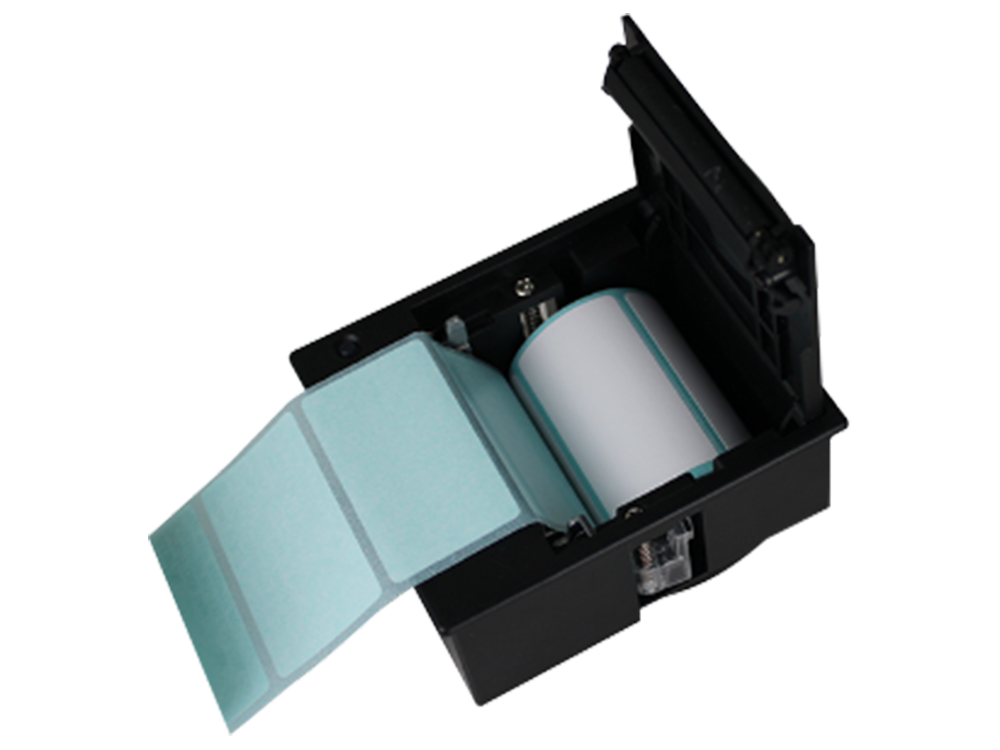
Quick Paper Loading: Features a side-open paper 仓 (paper compartment) with a one-touch lock. Paper rolls can be replaced in 10–15 seconds, even by staff wearing gloves—reducing downtime during peak printing periods.
Compact Size: Measures 150mm × 100mm × 80mm (length × width × height), fitting into standard event staff waist bags or small backpacks for easy transport between service points.
3.4 Ticket-Specific Function Support
Variable Data Printing: Integrates with event management software to print real-time variable data (e.g., dynamic seat numbers, print timestamps, unique verification codes) without pre-printing. This enables on-demand ticket issuance (e.g., reprinting lost tickets at the entrance).
Anti-Counterfeiting Features: Supports thermal anti-counterfeiting technologies, such as invisible UV-sensitive printing (visible only under UV light) or micro-text (0.5mm font size, unreadable by standard scanners). These features help staff verify ticket authenticity on-site.
Tear-Resistant Paper Compatibility: Optimizes print head temperature and pressure for tear-resistant thermal paper (made with reinforced fibers), ensuring tickets remain intact during handling (e.g., folding, insertion into pockets) and scanning.
4. Typical Application Scenarios
4.1 Large-Scale Concerts and Sports Matches
Demand Characteristics: High ticket volume (5,000–50,000 tickets), multiple entrance gates (8–20 service points), and peak printing during pre-event 1–2 hours. Outdoor venues may require weather resistance.
Printer Adaptation: Deploy 10–20 printers (one per gate), paired with staff tablets via Bluetooth for on-demand printing. Use 5,000 mAh detachable batteries to support 6–8 hours of use, and IP54 protection to withstand rain or dust. The 300 dpi resolution ensures QR codes are scannable even if tickets are slightly crumpled.
4.2 Expositions and Trade Shows
Demand Characteristics: Mobile service (e.g., printing tickets at temporary booths or visitor centers), frequent paper roll changes (different ticket types for exhibitors vs. visitors), and wireless synchronization with cloud-based registration systems.
Printer Adaptation: Use WiFi to connect to the cloud system for real-time data updates, and 80mm width paper rolls to print tickets with additional information (e.g., booth numbers, event schedules). The lightweight design allows staff to move the printer between 3–5 service points per day.
4.3 Small-Scale Cultural Events (e.g., Theaters, Art Galleries)
Demand Characteristics: Low to medium ticket volume (100–500 tickets), indoor use, and focus on cost-effectiveness. May require integration with simple ticketing apps (e.g., WeChat Mini Programs, Google Forms).
Printer Adaptation: Choose entry-level models with 2,000 mAh batteries (supporting 4 hours of use) and Bluetooth 5.0 for pairing with staff smartphones. The 203 dpi resolution meets basic barcode scanning needs, while the compact size fits on small ticket counters.
5. Reliability Testing and Quality Assurance
5.1 Printing Durability Testing
Continuous Printing Test: Print 1,000 consecutive tickets at maximum speed (100 mm/s) to verify no print head overheating or paper jams. The print quality (barcode scannability, text clarity) must remain consistent throughout the test.
Long-Term Wear Test: Simulate 500,000 prints (via accelerated testing) to check for print head degradation. After testing, the resolution should not drop below 80% of the initial standard.
5.2 Wireless Stability Testing
High-Density Interference Test: Place the printer in an environment with 100+ active wireless devices (e.g., smartphones, routers) to test data transmission. The success rate of print job reception should exceed 99.5%, with no data corruption.
Signal Range Test: Measure the maximum stable connection distance for WiFi (≥50 meters in open areas, ≥20 meters in crowded areas) and Bluetooth (≥10 meters), ensuring coverage across typical event venues.
5.3 Battery and Environmental Testing
Battery Cycle Test: Charge and discharge the battery 500 times, with the remaining capacity not falling below 70% of the initial capacity—ensuring the battery lasts for 1–2 years of regular use.
Environmental Simulation Test: Expose the printer to -10°C (for 4 hours) and 50°C (for 4 hours) to test print performance. After temperature cycling, the printer should start and print normally within 30 seconds.
6. Technical Development Trends
6.1 Integration of Multi-Functional Modules
Future models will integrate QR code scanners and NFC readers, enabling a single device to handle both ticket printing and verification. This eliminates the need for separate scanners, reducing equipment costs and improving on-site efficiency.
6.2 AI-Powered Smart Management
AI algorithms will be used to predict maintenance needs—such as alerting staff to replace the print head when wear reaches 80% or replenish paper rolls when remaining capacity is 20%. This prevents unexpected failures during events.
6.3 Eco-Friendly Optimization
Battery Technology: Adoption of solid-state lithium-ion batteries will increase energy density by 30%, extending battery life to 8–10 hours while reducing charging time to 1 hour.
Paper Compatibility: Enhanced support for biodegradable thermal paper (made from plant-based fibers) will align with the sustainability goals of large events (e.g., zero-waste festivals).
6.4 Faster Wireless Transmission
Integration of WiFi 6 (802.11ax) will increase wireless data transfer speeds by 4x, enabling real-time synchronization of large ticket databases (e.g., 10,000+ pre-registered attendees) and reducing latency in high-demand scenarios.
Read recommendations:
Energy-Efficient Direct-Thermal Printers
Principle and Application of Five-Color Printing Effect in Printers





Building C, Bairongda, Ma'anshan, Bao'an District, Shenzhen City, Guangdong Province
Tel:18823301751
Service Hotline:400-008-8930
















 2025-04-07