

Time:2025.12.02Browse:1
Technical and Application Analysis of High-Resolution Battery-Powered Thermal Printers for Retail Receipts
1. Core Definition and Positioning in Retail Scenarios
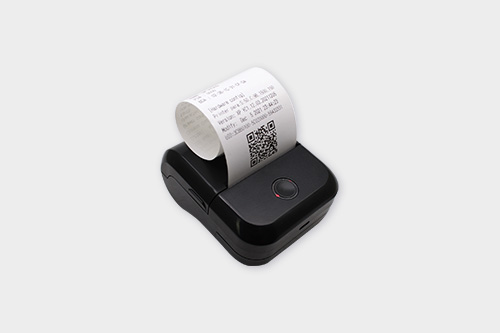
High-resolution battery-powered thermal printers for retail receipts are portable printing devices designed specifically for retail transaction scenarios. They integrate two core features—high printing resolution (to ensure clear display of text, barcodes, and logos on receipts) and battery-powered mobility (to break free from reliance on wired power supplies)—addressing the diverse printing needs of modern retail environments, such as mobile checkout, temporary cashier stations, and in-store product verification. Unlike standard thermal printers, these devices prioritize two key retail-centric requirements: first, high-resolution output to ensure scannable barcodes (e.g., UPC, QR codes) and legible small text (e.g., discount details, membership numbers); second, long battery life to support all-day operation during peak retail hours (e.g., weekends, promotional events).
2. Core Technical Characteristics
2.1 High-Resolution Printing Technology
The core of high-resolution performance lies in the thermal printhead design. Typically, these printers adopt a printhead with a resolution of 203 DPI (dots per inch) as the baseline, with high-end models reaching 300 DPI. The printhead uses a ceramic substrate with densely arranged heating elements—for 203 DPI, the spacing between adjacent heating points is approximately 0.127 mm, while 300 DPI reduces this spacing to 0.085 mm—ensuring that even small text (font size 6 or smaller) and 1D/2D barcodes (minimum barcode width 0.1 mm) remain clear and scannable. To prevent uneven heating (which causes blurring), the printhead integrates a temperature control chip that adjusts the heating power of each element in real time, maintaining consistent print quality across the entire receipt width (commonly 57 mm or 80 mm for retail receipts).
2.2 Battery Performance and Energy Efficiency
Battery configuration is tailored to retail usage patterns. Most models use lithium-ion batteries with capacities ranging from 2000 mAh to 5000 mAh. A 3000 mAh battery can typically support 300-500 receipt prints per full charge (based on average receipt length of 10 cm and print speed of 50 mm/s). To extend battery life, the devices incorporate multiple energy-saving designs: an automatic sleep mode that activates after 30 seconds of inactivity (reducing power consumption from 500 mW to less than 50 mW), a low-power Bluetooth module (e.g., BLE 5.0) for data transmission, and an intelligent power management chip that optimizes current distribution during printing (avoiding excessive power draw during peak heating). Charging support includes fast charging (e.g., 5V/2A input, 80% charge in 1.5 hours) to minimize downtime during retail operations.
2.3 Print Speed and Media Adaptability
Print speed balances efficiency and quality, with typical speeds ranging from 40 mm/s to 80 mm/s. For retail scenarios requiring quick checkout (e.g., convenience stores, fast-food outlets), 60-80 mm/s models are preferred, enabling a standard 10 cm receipt to be printed in 1-2 seconds. In terms of media adaptability, the printers support thermal receipt paper with thicknesses of 50-80 μm (the most common specification for retail) and can handle slight variations in paper width (tolerance ±1 mm) to accommodate different suppliers’ media. The paper feed mechanism uses a rubber roller with anti-slip texture and a tension-adjustable spring, preventing paper jams—an issue that frequently disrupts retail checkout workflows.
2.4 Portability and Durability
Portability is optimized for retail mobility: most models have dimensions of less than 150 mm × 100 mm × 60 mm and weigh 300-500 grams, allowing easy handling in one hand or placement in a small checkout bag. Durability is enhanced to withstand retail environment wear: the outer casing uses impact-resistant ABS plastic (able to withstand drops from 1.2 meters onto concrete without functional damage), and the printhead is coated with a wear-resistant layer (e.g., titanium nitride) that supports up to 100,000 print meters (equivalent to approximately 1 million standard retail receipts), reducing maintenance frequency.
3. Adaptation to Retail Receipt-Specific Requirements
3.1 Barcode and Text Clarity for Retail Operations
Retail receipts often include critical information such as product barcodes (for returns), transaction QR codes (for digital receipt access), and promotional codes (for customer rebates). High-resolution printing ensures that these elements meet industry scannability standards: 1D barcodes (e.g., UPC-A) must have a minimum contrast ratio of 3:1 (between black and white areas), and 2D barcodes (e.g., QR codes) must achieve a error correction level of H (able to withstand up to 30% damage and still scan). For text, the printer supports font smoothing technology, eliminating jagged edges on small text (e.g., "tax amount" or "membership ID") to avoid customer confusion or disputes.
3.2 Compatibility with Retail POS Ecosystems
To integrate with diverse retail POS systems (e.g., mobile POS apps on smartphones, traditional cash registers), the printers support multiple connectivity options: Bluetooth 5.0 (for stable connections within 10 meters, avoiding interference from other in-store devices like WiFi routers), WiFi (for integration with cloud-based POS systems, enabling remote print job management), and USB-C (for wired connections to stationary cash registers). They also support common retail print protocols (e.g., ESC/POS) to ensure compatibility with most POS software, reducing the need for custom driver development.
3.3 Rapid Response to Peak Retail Demand
During peak periods (e.g., holiday sales, lunch rushes), retail checkout lines require fast, uninterrupted printing. The printers address this with two key features: a large-capacity paper roll compartment (supporting 57 mm diameter rolls, equivalent to 80-100 receipts) to reduce paper replacement frequency, and a "print queue optimization" function that prioritizes urgent jobs (e.g., a customer waiting at the checkout) over non-urgent ones (e.g., inventory labels), minimizing checkout wait times.
3.4 Environmental Adaptability to Retail Spaces
Retail environments vary in conditions—convenience stores may have high humidity (near refrigerators), while clothing stores may have dust from fabric. The printers are designed to withstand these conditions: they have an operating humidity range of 20%-85% (non-condensing) and an IP54 dust and water resistance rating (preventing dust ingress and splashes from cleaning liquids). The thermal printhead also includes a self-cleaning function: after every 100 prints, the roller rotates to wipe away residual paper dust, preventing printhead clogging.
4. Typical Application Scenarios in Retail
4.1 Mobile Checkout in Grocery Stores
In large grocery stores, staff use mobile POS devices (e.g., tablets) to checkout customers in aisles during peak hours, reducing line lengths. High-resolution battery-powered thermal printers connect wirelessly to the tablets, printing receipts immediately after payment. The 203 DPI resolution ensures that produce barcodes (for weight verification) and coupon codes (for next-purchase discounts) are clear, and the 3000 mAh battery supports 400+ prints per charge—enough for a full 8-hour shift.
4.2 Pop-Up Stores and Temporary Promotions
Pop-up stores (e.g., holiday markets, brand pop-ups) lack fixed power outlets and permanent checkout stations. These printers’ battery power and portability make them ideal: staff can carry the printer in a backpack, and the compact size fits on small folding tables. The 80 mm receipt width supports printing detailed product descriptions (e.g., "limited-edition sweater") alongside transaction details, enhancing the customer experience.
4.3 Retail Returns and Exchanges
For in-store returns, staff need to print return receipts with clear transaction IDs and barcode references to the original purchase. High-resolution printing ensures that these barcodes scan quickly at the return desk, reducing processing time. The battery power allows staff to use the printer near the fitting rooms or product shelves (instead of only at the checkout), improving return efficiency.
4.4 Small Independent Retailers (e.g., Cafés, Boutiques)
Small retailers often have limited counter space and budget constraints. These printers’ compact design (occupying less than 100 cm² of counter space) and low maintenance costs (no ink or toner—only thermal paper) make them cost-effective. The 300 DPI high-end models also support printing store logos or custom designs on receipts (e.g., a café’s logo), enhancing brand recognition without additional printing costs.
5. Technical Development Trends
5.1 Higher Resolution for Enhanced Functionality
Future models will push resolution to 400 DPI, enabling printing of more detailed elements on receipts—such as small product images (e.g., a photo of a clothing item) or microtext (for anti-counterfeiting of high-value products like luxury goods). This will expand the printer’s use beyond basic receipts to value-added applications like product marketing.
5.2 Longer Battery Life with Sustainable Technology
To reduce environmental impact and operational costs, manufacturers will adopt more energy-efficient components: low-power OLED displays (replacing LCDs to cut power consumption by 30%), and recyclable lithium-polymer batteries (with longer cycle lives of 1000+ charges). Some models may also integrate solar charging panels (for outdoor pop-up stores) to extend battery life further.
5.3 Intelligent Features for Retail Digitalization
Integration with retail digitalization trends will add smart functions: cloud connectivity for real-time print job tracking (e.g., monitoring how many receipts are printed per store location), receipt data analytics (e.g., identifying popular promotional codes), and "digital receipt sync" (automatically sending a digital copy to the customer’s phone while printing a physical one), reducing paper waste.
Read recommendations:





Building C, Bairongda, Ma'anshan, Bao'an District, Shenzhen City, Guangdong Province
Tel:18823301751
Service Hotline:400-008-8930











 2025-06-13