

Time:2025.12.02Browse:1
Technical and Application Analysis of Compact Battery-Powered Thermal Printers for Mobile POS Systems
1. Core Definition and Demand-Driven Characteristics
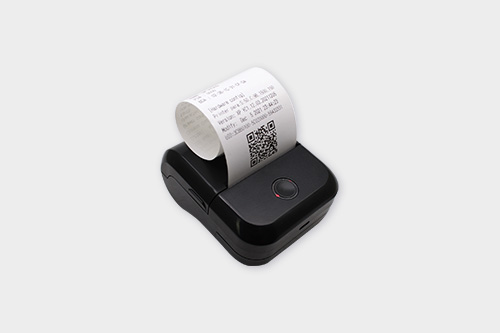
Compact battery-powered thermal printers for mobile POS systems are portable printing devices designed to integrate with mobile point-of-sale (POS) terminals (such as smartphones, tablets, or dedicated handheld POS devices). They leverage thermal printing technology (no need for ink or toner) and rely on rechargeable batteries for power, with the core advantages of small size, light weight, and on-the-go usability—addressing the printing needs of mobile transaction scenarios (e.g., instant receipt generation, commodity label printing, and delivery note printing) where fixed printers are impractical.
The demand for such printers is driven by three key mobile POS scenarios:
Retail mobility: Small retail stores, pop-up stalls, or market vendors require printing receipts immediately after completing transactions via mobile POS, without being constrained by power outlets or fixed equipment.
On-site service: Service industries (e.g., home appliance repair, door-to-door sales) need to print service certificates, warranty labels, or sales receipts on-site, requiring printers to be easy to carry and compatible with mobile POS data synchronization.
Last-mile delivery: Delivery personnel use mobile POS to confirm payments or collect signatures, and need to print delivery labels or customer receipts in real time, with requirements for fast printing speed and long battery life to support a full day of deliveries.
2. Core Technical Parameters and Performance Standards
2.1 Compact Size and Portability Indicators
Dimensions: Typical length ≤ 150mm, width ≤ 80mm, height ≤ 50mm—small enough to fit in a backpack, handbag, or the side pocket of a delivery bag.
Weight: Net weight (excluding battery) ≤ 300g, and total weight (with battery) ≤ 450g to avoid excessive burden during mobile use.
Ergonomics: The body adopts a curved design that fits the palm, with anti-slip rubber pads on the grip area to prevent slipping during one-handed operation (critical for scenarios where users hold both the mobile POS and the printer).
2.2 Battery Performance and Power Management
Battery capacity: Rechargeable lithium-ion batteries with a typical capacity of 1500mAh–3000mAh. A 2000mAh battery can support 200–300 prints per full charge (based on standard 58mm-wide, 80mm-long receipts).
Charging efficiency: Supports 5V/2A fast charging, with a full charge time of 1.5–2.5 hours; also compatible with USB-C charging (consistent with mobile POS charging interfaces to reduce the need for multiple chargers).
Power-saving features: Automatically enters standby mode after 5–10 minutes of inactivity (power consumption ≤ 5mA in standby), and wakes up instantly when a print command is received (wake-up time ≤ 1 second) to balance battery life and responsiveness.
2.3 Thermal Printing Performance
Print resolution: 203dpi (dots per inch) as the mainstream standard, supporting clear printing of text, 1D barcodes (e.g., Code 128, UPC-A), and 2D barcodes (e.g., QR codes)—meeting the needs of mobile POS for product tracing and payment verification.
Print speed: 50mm–100mm per second. A speed of 70mm/s allows a standard receipt (80mm long) to be printed in approximately 1.2 seconds, avoiding long waits for customers during peak transaction periods.
Paper compatibility: Supports thermal paper rolls with widths of 58mm or 80mm (the two most common sizes for mobile POS). The paper roll diameter is typically ≤ 40mm to fit the compact internal structure, and the paper feed mechanism uses a rubber roller with anti-jam design to reduce paper jams during mobile use.
2.4 Connectivity and POS Compatibility
Wireless connectivity: Supports Bluetooth 4.0 or higher (low power consumption, Bluetooth BLE) for stable connection with mobile POS devices, with an effective connection distance of up to 10 meters (sufficient for scenarios where the printer is placed on a counter and the POS is held by hand). Some models also support Wi-Fi (802.11 b/g/n) for multi-device connection in small retail stores.
Data synchronization: Compatible with common mobile POS operating systems (iOS, Android) and supports real-time data transmission—print content (e.g., transaction amount, product name, payment method) is synchronized with the POS transaction record within 0.5 seconds to avoid information mismatch.
Driver and protocol support: Natively supports ESC/POS command set (the universal protocol for thermal printers), eliminating the need for additional driver installation; also supports custom print templates (e.g., adding store logos or return policies) via POS software.
3. Structural Design and Durability Optimization
3.1 Compact Internal Layout
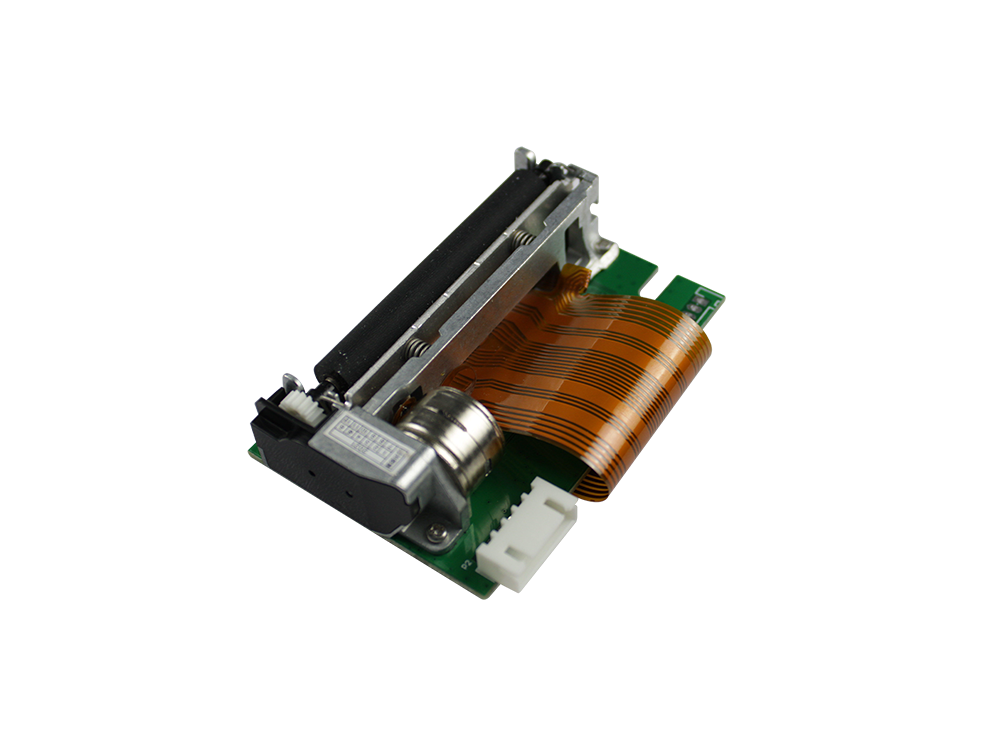
Integrated component design: The thermal print head, paper roll compartment, and battery are arranged in a stacked or side-by-side compact structure. For example, the battery is placed at the bottom, the paper roll compartment in the middle, and the print head at the top—reducing redundant space and minimizing the overall volume.
Miniaturized core components: Uses ultra-thin thermal print heads (thickness ≤ 5mm) and high-energy-density lithium-ion batteries (volume 30% smaller than traditional batteries of the same capacity) to further reduce the printer's size.
3.2 Durability for Mobile Scenarios
Shock resistance: The body uses ABS + PC composite plastic (impact resistance 20% higher than pure ABS), and critical components (print head, battery) are wrapped in EVA foam buffers. It can withstand a 1.2-meter drop test onto a concrete floor without functional damage—adapting to accidental drops during delivery or on-site service.
Environmental adaptability: Operates in a temperature range of 0°C–40°C (covering most indoor and outdoor mobile scenarios) and a relative humidity of 20%–85% (no condensation). The paper compartment is equipped with a moisture-proof seal to prevent thermal paper from absorbing moisture and jamming the printer.
Wear resistance: The paper feed roller uses wear-resistant silicone (service life ≥ 100,000 rotations) to avoid reduced paper feed accuracy due to long-term use; the body surface is treated with matte spray coating to resist scratches from daily carrying.
4. Typical Application Scenarios and Practical Value
4.1 Small Retail and Pop-Up Stalls
Application process: Vendors use mobile POS (e.g., a smartphone with POS software) to scan customer payment codes or process card payments. After the transaction is successful, the POS sends a print command to the compact thermal printer via Bluetooth, which immediately prints a receipt with transaction details (amount, time, payment method).
Value: Eliminates the need for fixed power supplies and bulky printers, allowing vendors to set up stalls flexibly (e.g., in markets, festivals, or temporary events). The fast print speed reduces customer waiting time, improving transaction efficiency.
4.2 Door-to-Door Delivery Services
Application process: Delivery personnel use mobile POS to confirm customer receipt of goods and collect payments (if applicable). After confirmation, the printer prints a delivery note (with recipient signature area) and a customer receipt. The delivery note is retained for logistics records, and the receipt is given to the customer.
Value: The long battery life (supporting 300+ prints per charge) meets the needs of a full day of deliveries (typically 100–200 orders). The compact size allows the printer to be carried in a delivery bag without taking up excessive space.
4.3 On-Site Service Industries
Application process: In home appliance repair or furniture assembly services, technicians use mobile POS to generate service orders and process on-site payments. After completing the service, the printer prints a service certificate (with repair details and warranty period) and a payment receipt for the customer.
Value: On-site printing of formal documents enhances service professionalism. The printer’s shock and moisture resistance ensures reliability in various home environments (e.g., dusty repair sites or humid kitchens).
5. Technical Challenges and Development Trends
5.1 Current Technical Challenges
Heat dissipation in compact design: The thermal print head generates heat during continuous printing (e.g., printing 10 consecutive receipts), and the compact body limits heat dissipation. Overheating may cause print quality degradation (e.g., blurred text). Current solutions include adding heat-dissipating silicone pads between the print head and the body, and limiting continuous printing to 15–20 sheets at a time.
Battery life vs. print speed: Higher print speeds (e.g., 100mm/s) consume more power, shortening battery life. Manufacturers need to optimize the print head’s energy efficiency (e.g., using pulse heating technology to reduce idle power consumption) and balance speed and battery life based on scenario needs.
Wireless connection stability: In crowded areas (e.g., busy markets), Bluetooth/Wi-Fi signal interference may cause connection drops between the printer and mobile POS. Solutions include adding signal anti-interference modules and supporting automatic reconnection (reconnection time ≤ 3 seconds) to avoid transaction interruptions.
5.2 Future Development Trends
Ultra-compact and lightweight: Further miniaturization (dimensions ≤ 120mm×60mm×40mm, weight ≤ 350g) to fit in a pocket, enhancing portability for individual users (e.g., independent salespeople).
Fast charging and long battery life: Adoption of lithium-polymer batteries with higher energy density (capacity ≥ 3500mAh) and support for 10W fast charging (full charge in 1 hour), enabling all-day use with a 30-minute quick charge.
Intelligent functionality integration: Adding sensors to monitor paper levels and battery status, with real-time alerts sent to the mobile POS (e.g., “Low paper” or “Battery ≤ 20%”) to avoid sudden downtime. Some models may also integrate NFC for one-tap pairing with mobile POS, simplifying connection steps.
Eco-friendly optimization: Using recyclable thermal paper (compatible with standard recycling processes) and low-power components to reduce environmental impact. The printer’s body may also use biodegradable plastics to align with sustainable development trends.
Read recommendations:





Building C, Bairongda, Ma'anshan, Bao'an District, Shenzhen City, Guangdong Province
Tel:18823301751
Service Hotline:400-008-8930















 2025-04-02